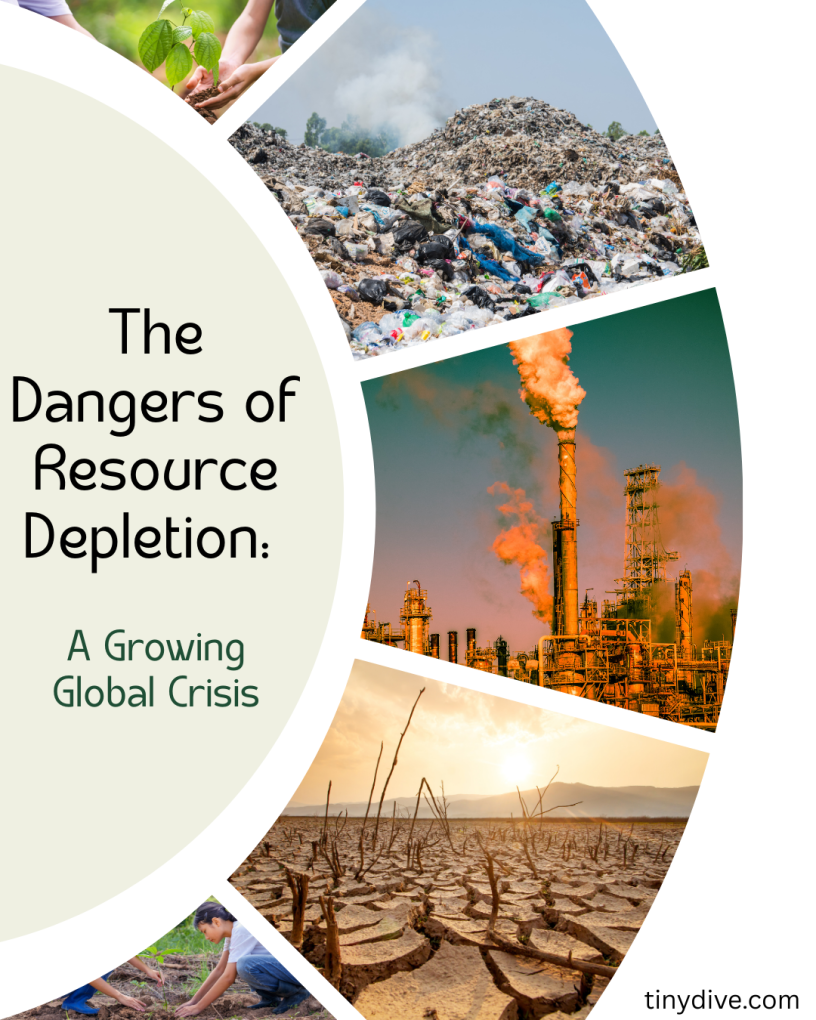
Resource depletion—the exhaustion of natural resources due to overconsumption, overpopulation, and unsustainable industrial practices—is one of the most pressing challenges facing humanity today. As the global population continues to rise and economies grow, the strain on our planet’s finite resources becomes increasingly severe. From fossil fuels to freshwater and forests, the overexploitation of these vital assets poses significant threats to environmental stability, economic security, and societal well-being.
The Scope of the Problem
Natural resources fall into two broad categories: renewable and non-renewable. Renewable resources, such as forests and fish stocks, can regenerate if managed sustainably. Non-renewable resources, like coal, oil, natural gas, and certain minerals, exist in finite quantities and cannot be replenished on a human timescale.
Currently, humanity is consuming natural resources at a rate that exceeds the Earth’s capacity to regenerate them. According to the Global Footprint Network, we would need 1.7 Earths to sustain our current rate of consumption. This unsustainable use leads to ecological overshoot, where natural systems are degraded faster than they can recover.
Environmental Impacts
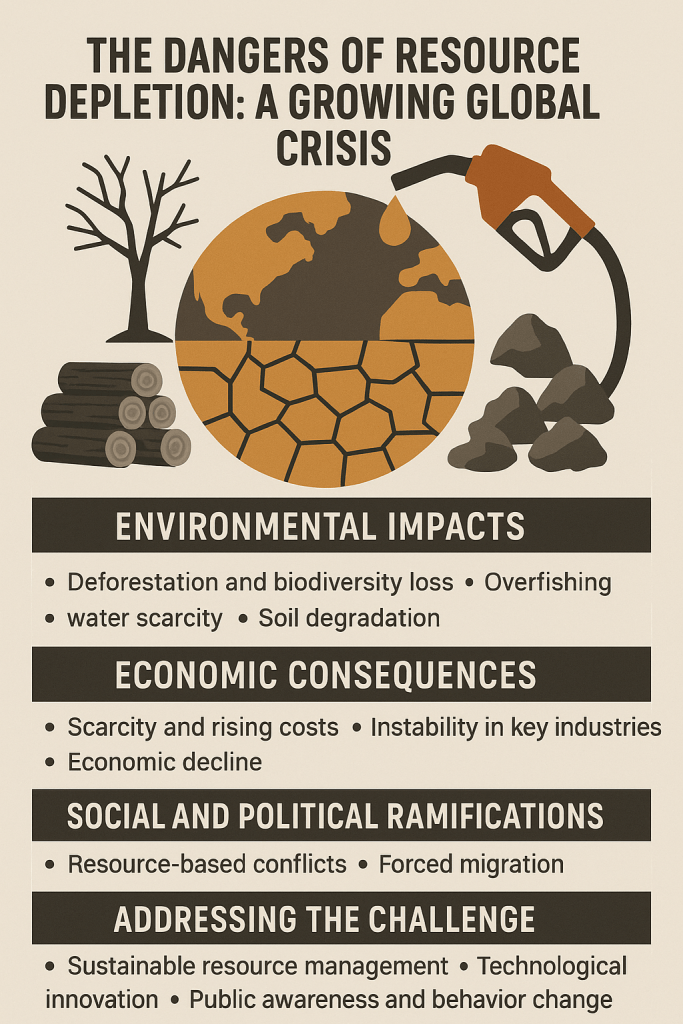
One of the most visible consequences of resource depletion is environmental degradation. Deforestation, for instance, not only depletes valuable timber but also contributes to biodiversity loss, soil erosion, and climate change. Overfishing disrupts marine ecosystems and threatens the food security of millions who depend on fish as a primary protein source.
Water scarcity, fueled by overuse and pollution of freshwater resources, is another critical concern. As aquifers dry up and rivers shrink, communities face growing challenges in accessing clean water for drinking, agriculture, and sanitation.
Economic Consequences
Resource depletion also carries significant economic risks. As resources become scarcer, their prices tend to rise, leading to increased costs for consumers and businesses alike. Industries reliant on raw materials—such as construction, manufacturing, and energy—may face instability, job losses, and reduced productivity.
Furthermore, countries that depend heavily on resource exports may suffer economically when those resources run low or become less accessible. This can lead to economic decline, increased debt, and political instability.
Social and Political Ramifications
The social consequences of resource depletion are profound. Scarcity of essential resources often leads to conflict—whether over water rights, land use, or energy access. In some regions, competition for dwindling resources has already triggered or exacerbated armed conflicts.
Additionally, the depletion of resources can lead to forced migration as communities move in search of more hospitable environments. This places additional pressure on receiving regions and can strain social services and infrastructure.
Addressing the Challenge
Combating resource depletion requires a multifaceted approach:
- Sustainable Resource Management: Governments and industries must adopt practices that balance resource use with long-term sustainability. This includes implementing regulations, investing in renewable energy, and promoting responsible land and water use.
- Technological Innovation: Advancements in recycling, energy efficiency, and alternative materials can reduce dependence on finite resources and improve the sustainability of production processes.
- Public Awareness and Behavior Change: Individuals can contribute by reducing waste, conserving energy and water, and supporting sustainable products and companies.
- International Cooperation: As resource depletion is a global issue, coordinated international efforts are essential to manage shared resources and mitigate environmental impacts.
Conclusion
Resource depletion is not a distant threat but a present-day reality with far-reaching implications. If left unchecked, it threatens the very foundations of human civilization—our environment, our economies, and our societies. By recognizing the dangers and taking decisive, collective action, we can transition toward a more sustainable and equitable future for all.
 Tiny Dive