The Biggest Mysteries in Science
Introduction
Science has propelled humanity into an age of unparalleled understanding and technological advancement. However, despite the strides made in various fields, there remain profound mysteries that challenge our comprehension of the universe and our place within it. These enigmas span from the origins of the cosmos to the intricacies of consciousness, each representing a frontier of human knowledge. This essay explores some of the most significant scientific mysteries that continue to intrigue and baffle scientists and thinkers.
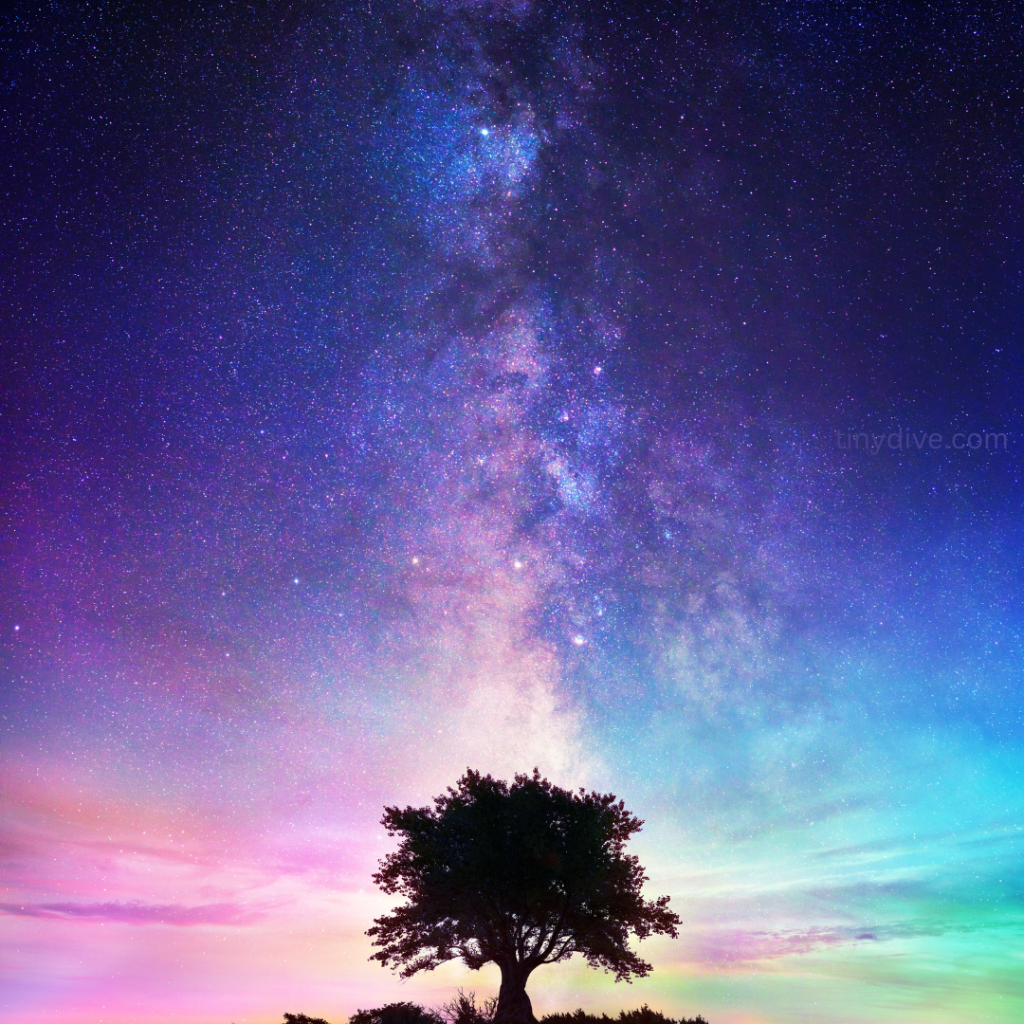
Dark matter is thought to comprise 90-95% of the mass of the Milky Way
The Nature of Dark Matter and Dark Energy
One of the most compelling mysteries in modern astrophysics is the nature of dark matter and dark energy. Together, these phenomena constitute about 95% of the total mass-energy content of the universe, yet they remain elusive.
Dark Matter
Dark matter is inferred from its gravitational effects on visible matter, radiation, and the large-scale structure of the universe. Galaxies rotate faster than can be explained by the mass of their observable components, suggesting the presence of unseen matter. Despite extensive searches, dark matter has not been directly detected, and its composition remains unknown. Various candidates have been proposed, including Weakly Interacting Massive Particles (WIMPs) and axions, but none have been conclusively identified.
Dark Energy
Dark energy, on the other hand, is hypothesized to be responsible for the accelerated expansion of the universe. First observed in 1998 through supernova measurements, dark energy’s exact nature is a profound mystery. It is often associated with the cosmological constant, a term introduced by Einstein, but its true origin and properties are still subjects of intense research and debate.
The Origins of Life
The question of how life began on Earth remains one of the most fundamental and enigmatic problems in science. The transition from non-living chemical processes to self-replicating biological entities is a process that is not yet fully understood.
Primordial Soup and Beyond
The “primordial soup” hypothesis suggests that life began in a warm pond or ocean, with simple organic molecules forming more complex structures through chemical reactions facilitated by energy sources such as lightning or volcanic activity. However, this theory does not fully explain the emergence of self-replicating molecules like RNA and DNA.

Hydrothermal vents were first discovered at 2,500 feet in 1977 near the Galapagos Islands
Alternative Theories
Alternative theories include hydrothermal vent origins, where life might have started in the nutrient-rich environments of deep-sea vents, and panspermia, which posits that life or its precursors could have been brought to Earth from elsewhere in the universe. Despite numerous experiments and observations, the exact pathway from chemistry to biology remains an open question.
The Nature of Consciousness
Consciousness, the state of being aware of and able to think about oneself and the environment, is another profound mystery. It encompasses subjective experiences, thoughts, and emotions, but its underlying mechanisms are not fully understood.
The Hard Problem of Consciousness
Philosopher David Chalmers coined the term “the hard problem of consciousness” to describe the challenge of explaining why and how physical processes in the brain give rise to subjective experiences. While neuroscience has made significant progress in mapping brain activity and understanding its correlation with mental states, the question of how these processes result in conscious experience remains unanswered.

Theories of Consciousness
Various theories attempt to explain consciousness, ranging from Integrated Information Theory (IIT), which suggests that consciousness arises from the integration of information in the brain, to the Global Workspace Theory, which proposes that consciousness is a result of information being globally broadcasted across different parts of the brain. However, no single theory has achieved consensus in the scientific community.
The Unification of Physics
In physics, the quest for a unified theory that reconciles the general theory of relativity, which describes gravitation and the large-scale structure of the universe, with quantum mechanics, which explains the behavior of particles at the smallest scales, remains a major challenge.
String Theory and Loop Quantum Gravity
String theory is one of the leading candidates for a unified theory, proposing that fundamental particles are not point-like objects but rather one-dimensional “strings” whose vibrations determine their properties. However, string theory is highly complex and has yet to make testable predictions. Another approach is loop quantum gravity, which attempts to quantize spacetime itself, but it too faces significant theoretical and experimental hurdles.
The Nature of Space and Time
The true nature of space and time themselves is a mystery intertwined with the quest for unification. Concepts like the multiverse and the nature of time’s arrow are speculative ideas that challenge our understanding of the universe’s fundamental structure.
The Fate of the Universe
The ultimate fate of the universe is another profound mystery that ties into our understanding of dark energy, cosmology, and the laws of physics.
Big Freeze, Big Rip, and Big Crunch
Several scenarios have been proposed for the universe’s long-term evolution. The Big Freeze suggests that the universe will continue to expand and cool, eventually reaching a state of maximum entropy where stars burn out and galaxies drift apart. The Big Rip hypothesizes that the acceleration of the universe’s expansion could eventually tear apart galaxies, stars, and even atoms. The Big Crunch posits that the expansion might reverse, leading to a collapse of the universe into a singularity.

The Role of Dark Energy
The exact nature of dark energy will play a crucial role in determining which, if any, of these scenarios will occur. Understanding dark energy is thus essential not only for grasping the universe’s current state but also its ultimate fate.
Conclusion
The biggest mysteries in science represent the boundaries of human knowledge, challenging our understanding of the universe, life, and consciousness. From the elusive nature of dark matter and dark energy to the origins of life and the enigma of consciousness, these profound questions inspire scientific inquiry and philosophical reflection. As we continue to explore these mysteries, each discovery brings us closer to unraveling the secrets of the cosmos, highlighting the limitless potential of human curiosity and the quest for knowledge.
 Tiny Dive