
The Village of Deline, located in Canada’s Northwest Territories, holds a complex history intertwined with the transportation of uranium and its tragic consequences. Situated near the shores of Great Bear Lake, Deline became a focal point for uranium mining and the transportation of this valuable resource during the mid-20th century, primarily for military and energy purposes.
In the 1930s and 40s, as World War II intensified, the demand for uranium surged due to its strategic importance in nuclear weapons and later in nuclear energy production. Great Bear Lake, located close to Deline, was discovered to have rich uranium deposits, leading to increased mining activities in the region. Deline, predominantly inhabited by the Sahtú Dene people, found itself at the center of these developments.
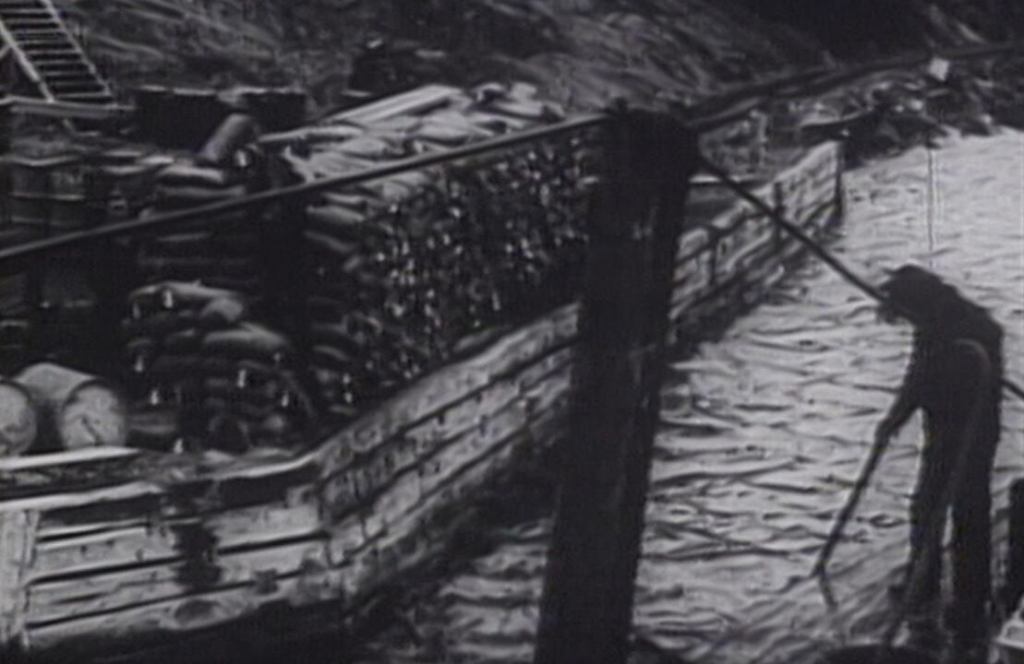
Archival footage shows a barge, loaded with bags of uranium, on the shores of Great Bear Lake. The Dene people of Deline were hired to carry the uranium, which they believe was used in the 1945 bombing of Hiroshima. (CBC)
The transportation of uranium ore from Great Bear Lake to processing facilities in southern Canada and the United States required extensive infrastructure, including roads, railways, and ports. Deline, as a nearby settlement, became involved in supporting these logistical operations. Local residents, including the Sahtú Dene, were employed in various capacities related to the transportation and mining of uranium.
However, the exploitation of uranium resources may have had devastating health consequences for the people of Deline and surrounding areas. Exposure to radioactive materials during mining, handling, and transportation processes are thought to have contributed to elevated rates of cancer and other serious health issues among the indigenous population, leading locals to refer to Deline as the ‘Village of Widows.’
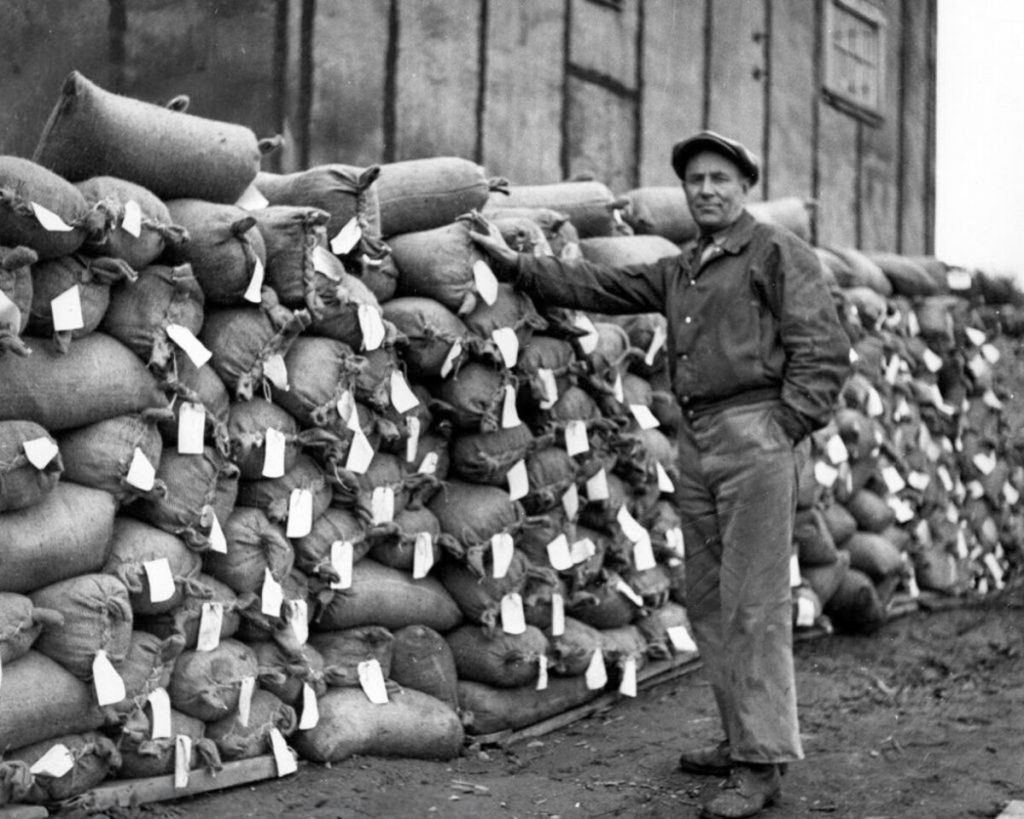
NWT Archives/N-1979-063-0081
Sacks of pitchblende concentrate awaiting shipment at Port Radium, Echo Bay, Great Bear Lake. 1939. These are the same sacks that the Dene carried for the mine.
The effects of radiation exposure may have been compounded by inadequate safety measures and limited understanding of the long-term health risks associated with uranium mining at the time, though some radioactivity experts have reported that they believe the levels of radioactivity would have been insufficient to pose a serious risk.
The tragic legacy of uranium mining in Deline is reflected in the high incidence of cancer cases and other health problems reported among its residents, particularly those involved directly or indirectly in the industry. The Sahtú Dene people have advocated for recognition of these health impacts and for greater accountability from governments and corporations involved in uranium mining, challenging their claims that the raw uranium did not pose a serious health risk.
Despite these challenges, Deline’s community has shown resilience in addressing the aftermath of uranium mining. Efforts to raise awareness about the health risks, advocate for compensation and support for affected individuals and families, and promote sustainable development practices that respect indigenous rights and environmental stewardship have been ongoing.
In conclusion, the Village of Deline’s role in transporting uranium highlights the intersection of industrial development, indigenous communities, and environmental health concerns. It underscores the importance of recognizing historical injustices, addressing health disparities, and empowering indigenous peoples in decisions that affect their lands and well-being. The experiences of Deline serve as a poignant reminder of the complex legacies left by resource extraction and the ongoing need for justice and healing in affected communities.
 Tiny Dive